🚚 Free Worldwide Shipping on All Orders!Shop Now
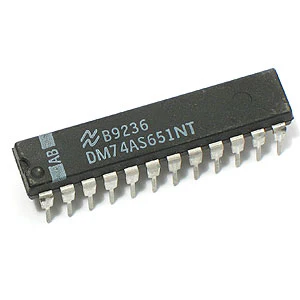
G4719A - 74AS651 Octal Bus Transceiver/Register
These devices consist of bus-transceiver circuits, D-type flip-flops, and control circuitry arranged for multiplexed transmission of data directly from the data bus or from the internal storage registers. Output-enable (OEAB and OEBA\) inputs are provided to control the transceiver functions. Select-control (SAB and SBA) inputs are provided to select real-time or stored data transfer. The circuitry used for select control eliminates the typical decoding glitch that occurs in a multiplexer during the transition between stored and real-time data. A low input level selects real-time data, and a high input level selects stored data.
Data on the A or B data bus, or both, can be stored in the internal D-type flip-flops by low-to-high transitions at the appropriate clock (CLKAB or CLKBA) terminals, regardless of the select- or output-control terminals. When SAB and SBA are in the real-time transfer mode, it is possible to store data without using the internal D-type flip-flops by simultaneously enabling OEAB and OEBA\. In this configuration, each output reinforces its input. When all other data sources to the two sets of bus lines are at high impedance, each set of bus lines remains at its last state.
Features:
Bus Transceivers/Registers
Independent Registers and Enables for A and B Buses
Multiplexed Real-Time and Stored Data
Choice of True or Inverting Data Paths
Choice of 3-State or Open-Collector Outputs to A Bus
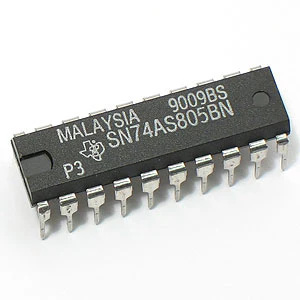
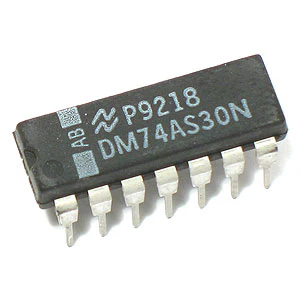
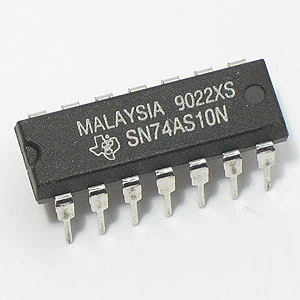
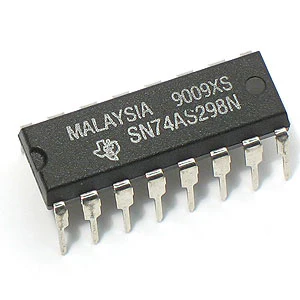
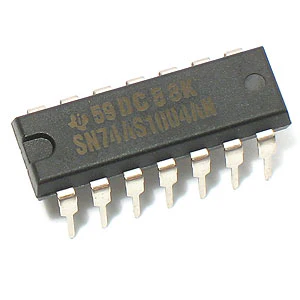
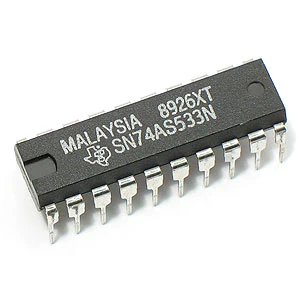
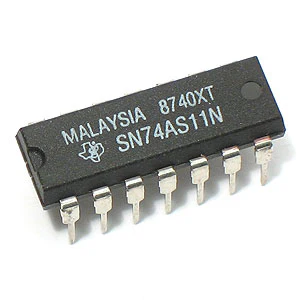
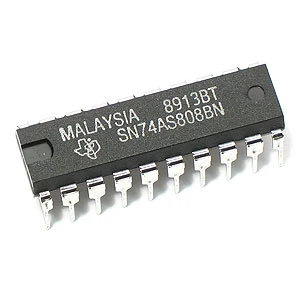
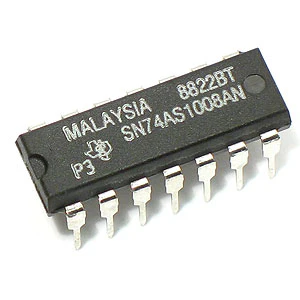
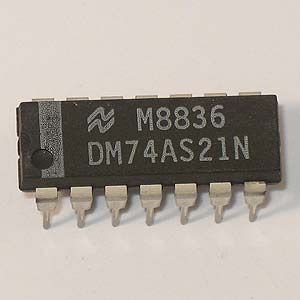
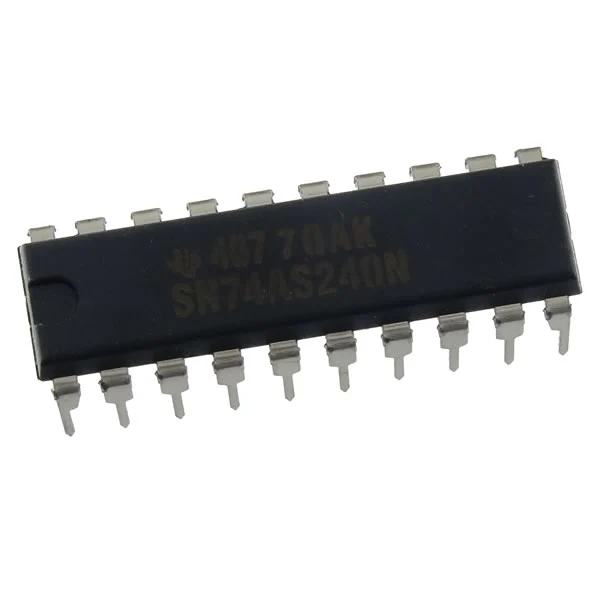
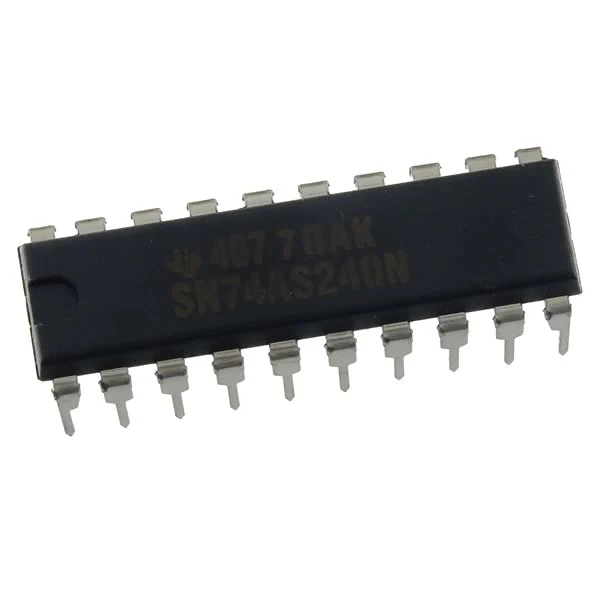
24 pin DIP. Actual brand may vary from picture.
G4719A
Data on the A or B data bus, or both, can be stored in the internal D-type flip-flops by low-to-high transitions at the appropriate clock (CLKAB or CLKBA) terminals, regardless of the select- or output-control terminals. When SAB and SBA are in the real-time transfer mode, it is possible to store data without using the internal D-type flip-flops by simultaneously enabling OEAB and OEBA\. In this configuration, each output reinforces its input. When all other data sources to the two sets of bus lines are at high impedance, each set of bus lines remains at its last state.
Features:
Bus Transceivers/Registers
Independent Registers and Enables for A and B Buses
Multiplexed Real-Time and Stored Data
Choice of True or Inverting Data Paths
Choice of 3-State or Open-Collector Outputs to A Bus
24 pin DIP. Actual brand may vary from picture.
G4719A
$2.49
G4719A - 74AS651 Octal Bus Transceiver/Register—
$2.49
Description
These devices consist of bus-transceiver circuits, D-type flip-flops, and control circuitry arranged for multiplexed transmission of data directly from the data bus or from the internal storage registers. Output-enable (OEAB and OEBA\) inputs are provided to control the transceiver functions. Select-control (SAB and SBA) inputs are provided to select real-time or stored data transfer. The circuitry used for select control eliminates the typical decoding glitch that occurs in a multiplexer during the transition between stored and real-time data. A low input level selects real-time data, and a high input level selects stored data.
Data on the A or B data bus, or both, can be stored in the internal D-type flip-flops by low-to-high transitions at the appropriate clock (CLKAB or CLKBA) terminals, regardless of the select- or output-control terminals. When SAB and SBA are in the real-time transfer mode, it is possible to store data without using the internal D-type flip-flops by simultaneously enabling OEAB and OEBA\. In this configuration, each output reinforces its input. When all other data sources to the two sets of bus lines are at high impedance, each set of bus lines remains at its last state.
Features:
Bus Transceivers/Registers
Independent Registers and Enables for A and B Buses
Multiplexed Real-Time and Stored Data
Choice of True or Inverting Data Paths
Choice of 3-State or Open-Collector Outputs to A Bus
24 pin DIP. Actual brand may vary from picture.
G4719A
Data on the A or B data bus, or both, can be stored in the internal D-type flip-flops by low-to-high transitions at the appropriate clock (CLKAB or CLKBA) terminals, regardless of the select- or output-control terminals. When SAB and SBA are in the real-time transfer mode, it is possible to store data without using the internal D-type flip-flops by simultaneously enabling OEAB and OEBA\. In this configuration, each output reinforces its input. When all other data sources to the two sets of bus lines are at high impedance, each set of bus lines remains at its last state.
Features:
Bus Transceivers/Registers
Independent Registers and Enables for A and B Buses
Multiplexed Real-Time and Stored Data
Choice of True or Inverting Data Paths
Choice of 3-State or Open-Collector Outputs to A Bus
24 pin DIP. Actual brand may vary from picture.
G4719A